Nissan Announces 62kWh LEAF e+ N-TEC. With Free V2G Charger!

A Nissan press release has just landed in my in box, and I’m now so excited I’m going to reproduce it in reverse order! The final bullet point reads as follows:

Earlier in the release the following points are also mentioned:

Nissan has confirmed the all-electric LEAF range will benefit from a new N-TEC limited edition, joining the cross car line N-TEC versions of Micra, Qashqai and X-Trail, which were launched in January.LEAF e+ N-TEC 2020

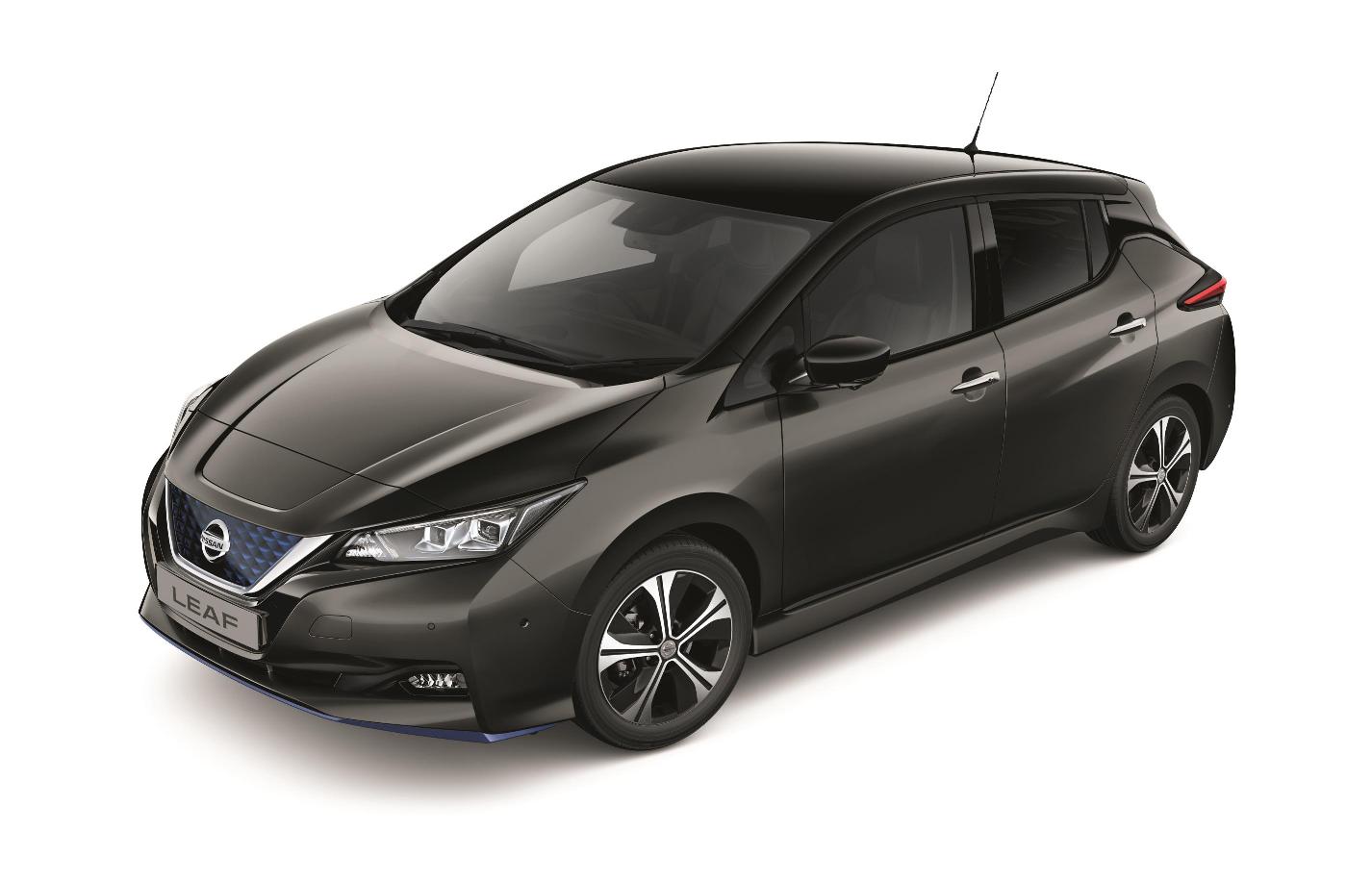
Priced at £32,795 OTR (including the £3,500 Government Grant) the LEAF e+ N-TEC creates a new accessible price point for the higher 62kWh capacity battery drivetrain. Launched in summer 2019, the e+ version of LEAF delivers 217PS of power, 340Nm of torque and up to 239 miles of range (WLTP combined) on a single charge.

The LEAF e+ was previously available as a range-topping Tekna version. The new N-TEC edition, limited to just 1,000 examples, is based on the N-Connecta grade of the 40kWh line-up, but with added technology and styling, complementing the higher capacity 62kWh battery.

The N-TEC specification adds:

  • LED Pack and LED fog lights with cornering function (usually £495 option)
  • ProPILOT with Lane Keep Assist & Traffic Jam Pilot (usually £595 option)
  • Electronic Parking Brake
  • Metallic Blue Front Splitter
  • Revised e+ suspension set-up

It seems as though the “free” OVO vehicle-to-grid wallbox comes as part of Nissan’s finance campaign, available until 31st March 2020 as part of Nissan’s Red Tag Event.

I have endeavoured to contact both Nissan UK and OVO for comment, but they have yet to get back to me.

P.S. Nissan UK have been in touch. They assure me that the 62 kWh LEAF N-TEC is already in production, and if the 1000 special edition vehicles haven’t all been sold by March 31st a new finance offer will be made available. Based on that conversation it sounds as though the “free” V2G wallbox is available as part of OVO Energy’s continuing V2G trial, and is not dependent on Nissan’s finance. Full details can be seen at:

https://www.ovoenergy.com/electric-cars/vehicle-to-grid-charger

Our V2G Charger stores electricity in your Nissan electric vehicle battery when it’s cheaper and more likely to have been produced by renewable sources, then sells energy back to the grid when it’s in demand.

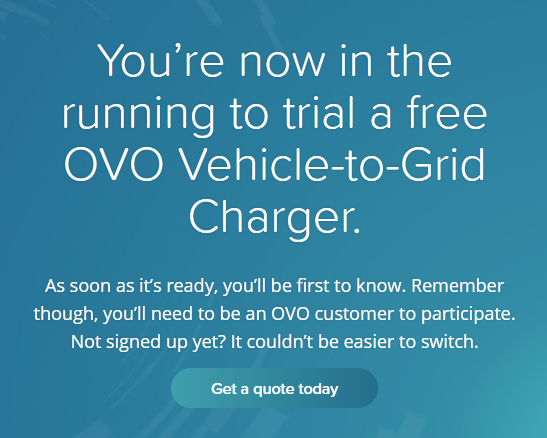
Sign up to OVO Energy, join the trial and you’ll get a groundbreaking charger for free. You will also get a £75 credit on your OVO Energy bill and a payment of up to 30p per kWh of energy exported back to the grid.

Watch this space for more news as and when we receive it.

OVO Energy Install UK’s First V2G Home EV Chargepoint?

OVO Energy sent me a very nice birthday present yesterday via Twitter:

In an associated press release OVO announced:

Following the unveiling of the world’s first widely available, domestic vehicle-to-grid charger, at the Energy Technology Product Showcase in April, OVO can confirm it has successfully installed the first charger in a customer’s home.

Tom Pakenham, Director of Electric Vehicles, said: “We’re excited to install a vehicle-to-grid charger in a customer’s home. By developing vehicle-to-grid technology we’re enabling drivers to store renewable energy in their cars, use that to power their homes and to sell energy back to the grid at peak times, allowing our customers to earn rewards from smart charging their electric vehicle.”

By way of additional background information OVO added that:

The 6kW OVO Vehicle-to-Grid (V2G) Charger is the world’s first domestic bi-directional charger. It offers drivers of certain electric vehicles the opportunity to discharge excess electricity from their cars back to the electric grid to help supply energy at times of peak demand. It is the first such product to be produced and made commercially available at volume in the world.

Available to Nissan LEAF drivers with a 30 or 40kWh battery, the OVO Vehicle-to-Grid Charger could enable Nissan drivers to have free power for their electric vehicles by selling energy back to the grid. This is an important step for both companies to deliver their mission to offer customers free power for their electric vehicles.

This is part of the Innovate UK Vehicle-to-Grid competition, funded by the Office for Low Emission Vehicles (OLEV) and the department for Business Energy and Industrial Strategy (BEIS), in partnership with Nissan, CENEX, Indra and OVO.

OVO Energy Reveal “Domestic V2G Charger” Images

We’ve previously mentioned OVO Energy’s announcements about the vehicle-to-grid technology they’ve been working on, and now we can show you some pictures too! In a news release to accompany the launch event in London OVO announced yesterday that:

Today at its first ever Energy Technology Product Showcase, OVO unveiled a range of products that together with its intelligent platform VCharge will form the components of a distributed, domestic energy system for the future.

The range includes the world’s first widely available, domestic electric vehicle-to-grid charger, designed and manufactured in the UK. The charger will accelerate the global transition to electric vehicles and will enable drivers to sell surplus energy from their electric vehicle batteries back to the electricity grid – meaning they may never have to pay to be on the road again.

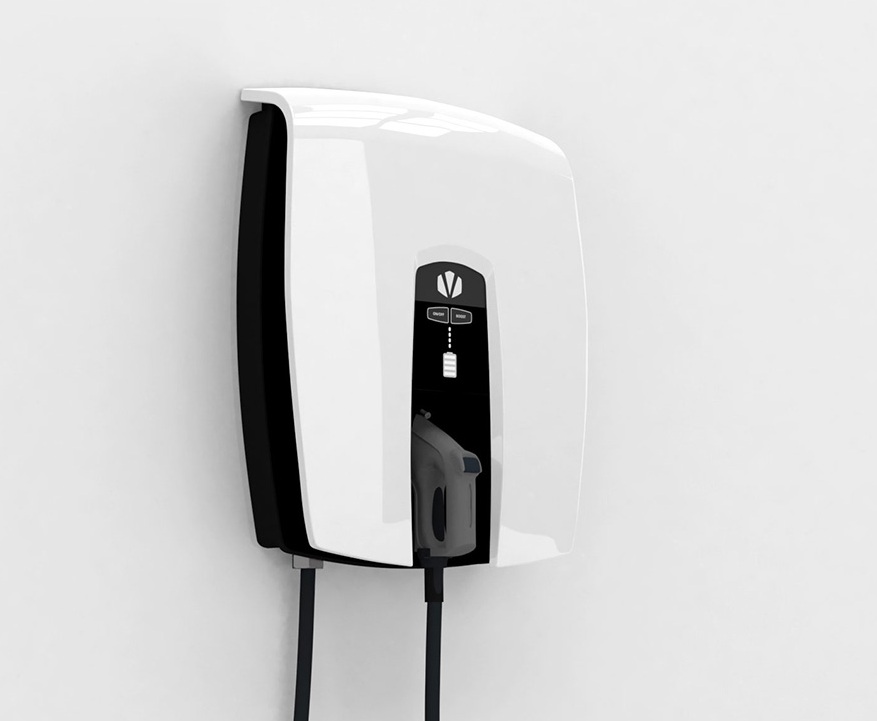
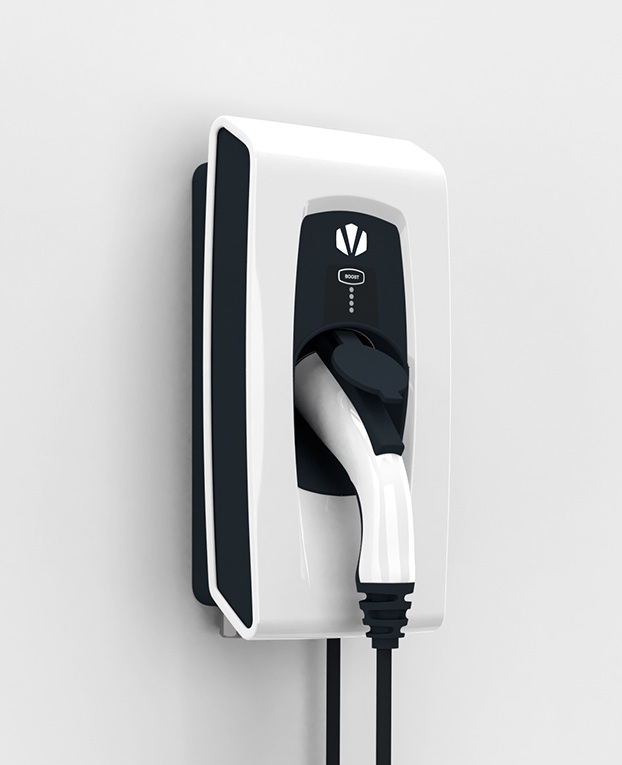
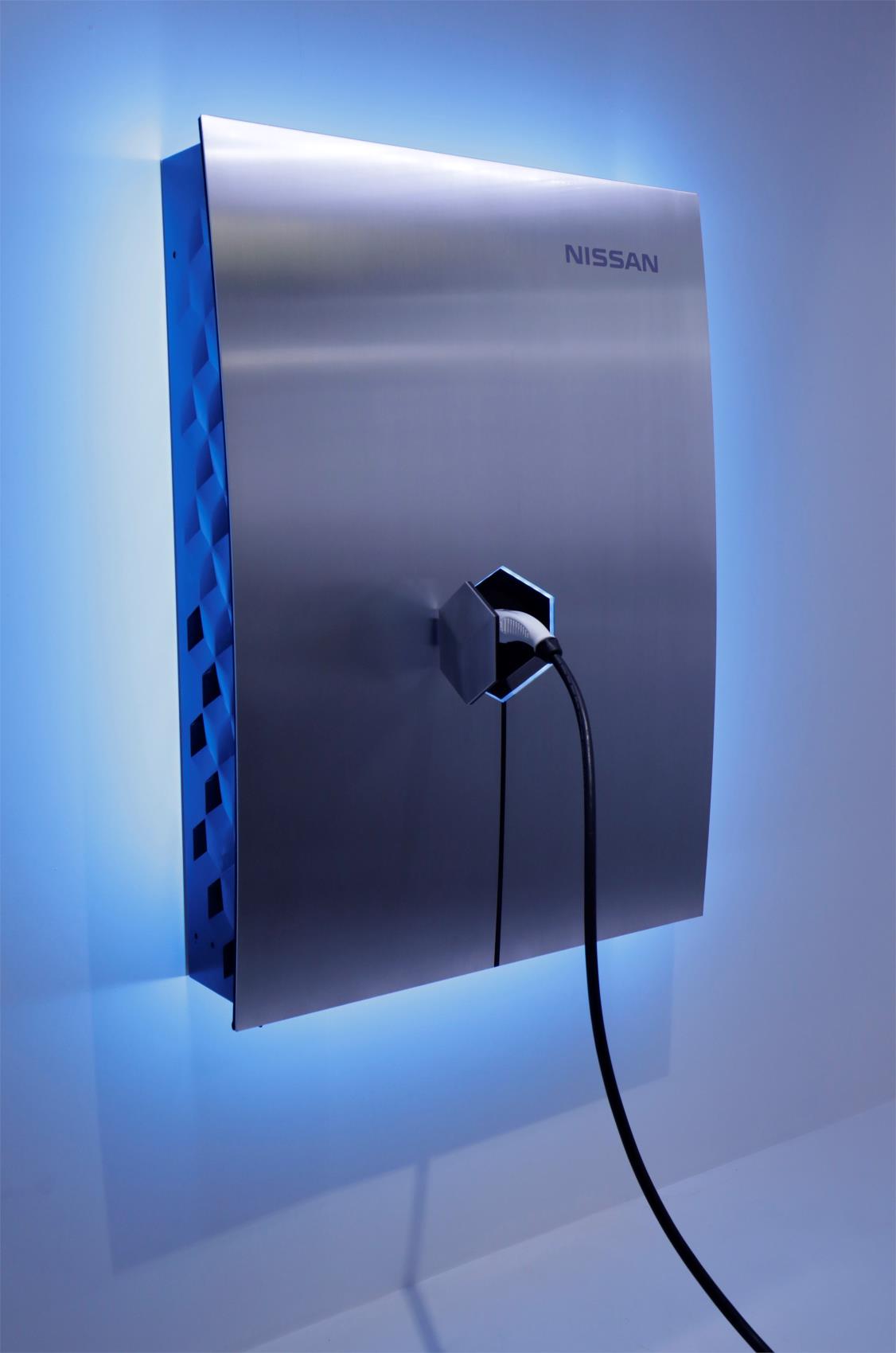
On the new V2G page on OVO’s web site they even revealed what their “domestic electric vehicle-to-grid charger” will look like. Here it is:

OVO-V2G-1

According to OVO’s CEO Stephen Fitzpatrick:

Renewable energy and electric vehicles are perfect partners for the 21st Century. Today we’re launching the world’s first widely available vehicle-to-grid charger, helping to solve one of the biggest challenges facing the energy sector. We’re enabling thousands of EV batteries to help balance the grid in times of peak demand, more renewable energy to come onto the system, and households to reduce their electricity bills.

This is the first step in building the distributed energy system of the future. One that is truly customer centric and built around households and their connected energy storage devices.

Our completely new approach to energy has been made possible by the convergence of emerging technologies, applying intelligence, and years of working with customers to redesign the entire energy system.

The technical specification of their V2G charger available on OVO’s web site doesn’t give one an awful lot to go on:

The OVO Vehicle-to-Grid Charger is 520 x 210 x 690 mm. It weighs 17kg. And it can be installed indoors or outdoors.

although the snaps from the launch event also reveal:

Power rating: 6 kW charge and discharge.

The news release continues:

The OVO Vehicle-to-Grid Charger is the world’s first widely available domestic bi-directional charger. Using VCharge, this charger will give drivers the option to discharge and sell surplus electricity from their electric vehicle batteries back to the electricity grid, helping to supply energy at times of peak demand. VCharge will also optimise vehicle charging to take advantage of cheaper electricity when it’s available and when there are more renewables in the system. Through their partnership, Nissan and OVO are leading the way with this technology.

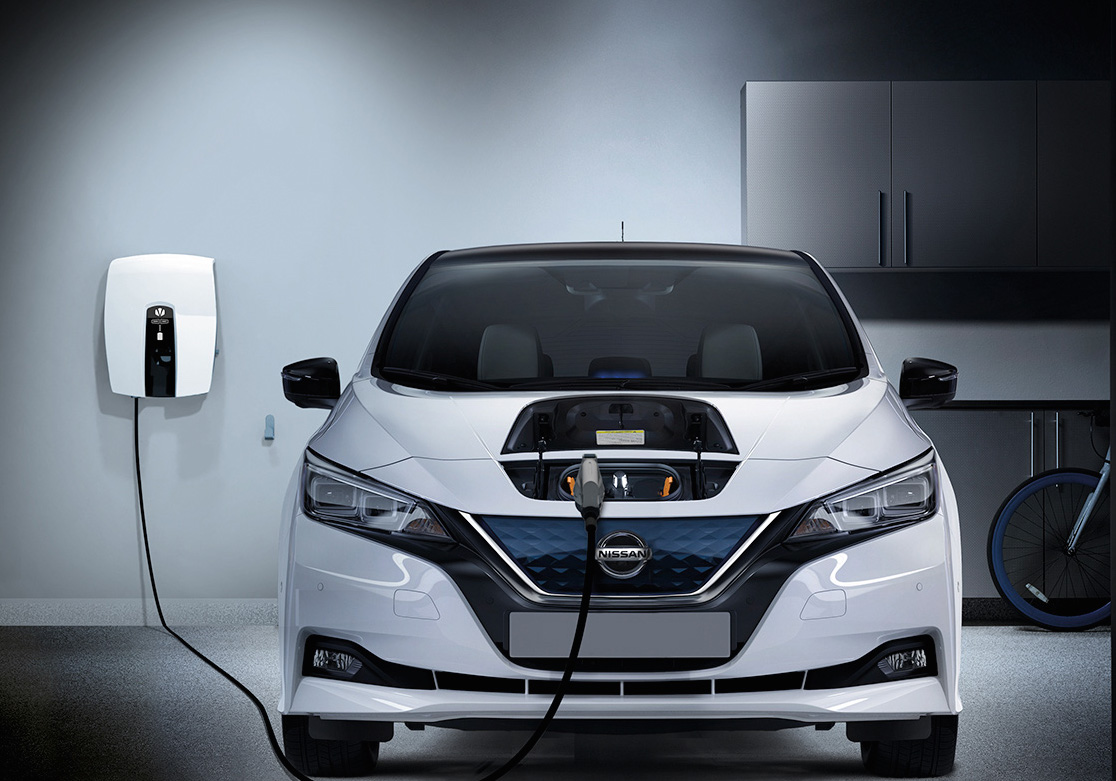
Here’s another image, this time portraying OVO’s partnership with Nissan:

OVO-V2G-2

With slightly less fanfare OVO also pointed out that:

OVO is launching a Smart Charger which, like the vehicle-to-grid charger, will enable electric vehicles to be charged during off-peak hours, thereby easing pressure on the electricity grid as well as allowing drivers to take advantage of cheaper off-peak electricity.

There don’t seem to be any pictures available of the OVO smart charger yet, apart from snaps taken at the launch event:

However as the image above suggests OVO had more exciting news to reveal yesterday:

OVO is also announcing its debut in the home battery market with a Home Energy Storage solution. This powerful battery with a custom built control and communications unit will dynamically and proactively manage energy and power use. It will enable everyone to store, use and sell back electricity, whether or not they produce it themselves.

As if that wasn’t enough, there is still more to tell you!

The smart electrification of heating is an essential component of decarbonising our energy system. Showcased at the event was the OVO Heat Dynamo, an internet connected smart switch that can be retrofitted to electric storage heaters. It allows users to control the level of heat they want, when they want it via OVO’s Smart Heat Customer App, while reducing their electricity bills by as much as 30% and providing balancing services to the electricity grid.

Here at V2G UK we did of course sign up for news of OVO’s V2G activities many moons ago. They’ve asked us to do that again so we did, only to be informed:

2018-04-19_0852_FreeV2G

It would seem that OVO’s announcement of the “the world’s first widely available, domestic electric vehicle-to-grid charger” is a trifle premature? According to their web site it’s:

Arriving this summer.

P.S. Here’s a better picture of the OVO smart charger:

OVO-Smart-1

“Arriving this autumn”

UK Spends £30 million on V2G Technology

As we reported back in the summer:

The United Kingdom Government… pledged to pump £20 million into vehicle-to-grid technology.

After an apparently interminable wait it was announced on Twitter yesterday that:

Today a plethora of press releases have added some flesh to those bare bones. According to UK Power Networks:

UK Power Networks is part of a consortium that has won £11m government funding for four electric vehicle demonstration projects as part of a series of Vehicle to Grid (V2G) innovation bids.

Vehicle to Grid technology enables energy stored in an electric vehicle’s battery to be fed back into the electricity network at times of peak demand. By recharging when demand is low and putting energy into the electricity network when it is high, V2G helps manage the peaks and troughs, balance the network and make it more efficient.

The government is to ban the sale of all new diesel and petrol cars and vans by 2040, and it sees a smarter and more flexible electricity system as a major benefit to consumers and a key enabler to transport’s future growth.

UK Power Networks currently has more than 30,000 electric vehicles connected to our networks and by 2030 we anticipate that figure will rise to between 1.2-1.9m. Many of these electric vehicles will be V2G capable and could be used to support delivering electricity reliably and at the lowest possible cost.

The competition is funded by the Department for Business, Energy and Industrial Strategy (BEIS) and the Office for Low Emission Vehicles (OLEV) and is delivered by Innovate UK.

The four V2G projects that UK Power Networks will be taking part in are:

  • Bus2Grid: Supporting a project to turn a 30-bus garage into the first of its kind in the UK Vehicle-to-grid (V2G) bus garage.
  • e4Future: A trial on 1,000 V2G fleet vehicles
  • Beating Home: Domestic customer V2G trial involving customers in specific areas.
  • V2Street: Public charging networks with a local authority and a charge point provider. Targeted at the 60-70% of Londoners without off-street charging capability.

Note that the £20 million on offer last August has been increased to £30 million today! Perhaps that’s at least a partial explanation for the delay in the appearance of the announcement? UKPN don’t provide much detail on the four out of twenty one projects revealed so far, so let’s look a bit further afield shall we? Heading back to Twitter there’s an announcement of a new product offering and a new EV web site from Octopus Energy unsurprisingly entitled Octopus Electric Vehicles:

which was swiftly followed by another Tweet explaining that:

which put us on the trail of this press release from ChargePoint Services:

Octopus Energy today launched a new consortium to develop the first large-scale domestic trial of vehicle-to-grid (V2G) charging in the UK, following a £3 million funding injection by BEIS and OLEV delivered by InnovateUK.

Comprising Octopus Energy, Octopus Electric Vehicles, UK Power Networks, ChargePoint Services, Open Energi, Energy Saving Trust and Navigant, the consortium will roll out vehicle-to-grid charging technology to UK electric vehicle (EV) drivers this year.

The £7million project will install 135 V2G chargers in a ‘cluster’ delivery model that will facilitate research into the impact of widespread EV rollout on the UK’s electricity grid. The project will demonstrate the benefits of using domestic electric vehicle batteries to provide grid flexibility, cheaper transport and energy to homeowners, and faster decarbonisation of the UK’s power and transport sectors.

Customers will be able to discover electric vehicles, take them for a test drive and access a special V2G bundle, Octopus PowerLoop, when leasing a V2G compatible car. A two-way charger will enable the driver to charge their vehicle intelligently, using their vehicle battery to power their home during peak times or selling spare power back to the grid – creating value for the driver.

The technology could revolutionise the energy system by enabling electric vehicles to act as battery packs for the grid, helping to solve the challenge of how to harness the full potential of renewable energy whilst making sure that it is always available on demand. Evidence also shows that V2G use has the potential to increase battery life.

The ChargePoint announcement goes on to quote Octopus Electric Vehicles CEO Fiona Howarth:

Octopus Energy was founded to drive down the cost of energy to customers and the planet, and Octopus Electric Vehicles is the next phase in that mission.

There has been a lot of talk from the sidelines about how vehicle-to-grid technology will change the face of energy, but with this consortium we will be the first in the UK to actually deliver it to hundreds of households. We’re delighted to be working with this consortium of visionary companies, and proud to be backed by Innovate UK.

It sounds as though the Octopus Group are intent on competing head on with OVO Energy who previously “embraced” V2G technology:

We’re hurtling towards a place where ‘two-way’ electric car chargers can enable homeowners with electric cars to sell their energy back to the national network. It’s a smart idea when you consider that over 90% of cars are parked at any one time – which is a lot of energy just sitting there doing nothing. This technology will give you the opportunity to manage your energy your way, and potentially become energy self-sufficient, reducing everyone’s reliance on energy companies. Get solar panels fitted, then adopt vehicle to grid technology and your home could become a private mini-power station!

There are a number of other quotes too. Mark Thompson, Senior Innovation Lead at Innovate UK added:

Vehicle-to-Grid is one of the most iconic parts of the electric vehicle domain, and one that represents a great opportunity for engaging society with the energy system for win-win benefit. The Octopus V2G project is part of a creative, diverse and ambitious group of V2G projects announced today that are way ahead of anything being done currently world-wide, and give the UK a genuine competitive edge in the electrification of transport.

Alex Bamberg, Managing Director, ChargePoint Services, said:

ChargePoint Services’ GeniePoint Network continues to be at the cutting edge of delivering the smartest and most reliable electric vehicle charging network in the UK. With this consortium, we join with existing partners to enable us to provide real benefits to the end user both in terms of efficiency and reduced cost. Our investment in the GeniePoint Network and its class leading reliability is further enhanced, whilst at the same time ensuring protection and flexibility of the UK’s energy Grid.

Ian Cameron, Head of Innovation at UK Power Networks said:

Electric vehicles are effectively energy sources on wheels, so there are tremendous opportunities to explore how electricity networks can use any spare capacity in those batteries to benefit our customers.

In the future you could use your car battery to power your house or earn money by selling its spare energy back into the network at peak times, and all of this whilst ensuring you have enough energy for your next day’s commute. We’re innovating to keep our customers moving at the lowest possible cost.

Dagoberto Cedillos, Strategy and Innovation Lead at Open Energi said:

Smart charging solutions that align the needs of drivers and the electricity grid are fundamental to the future of sustainable energy and transport. In partnership with our fellow consortium members, we’re applying cutting-edge tech to help realise the enormous opportunity that is domestic V2G charging in the UK, and internationally.

That is of course all very good news, but it raises one big question, in my mind at least. For some strange reason the Beating Home/PowerLoop (depending on which press release you prefer) consortium doesn’t seem to include a bi-directional electric vehicle charging point manufacturer and none of the assorted news releases and quotations mentions that rather essential piece of hardware, or indeed shows a picture of such equipment in action. To right that particular wrong, here’s one I prepared earlier:
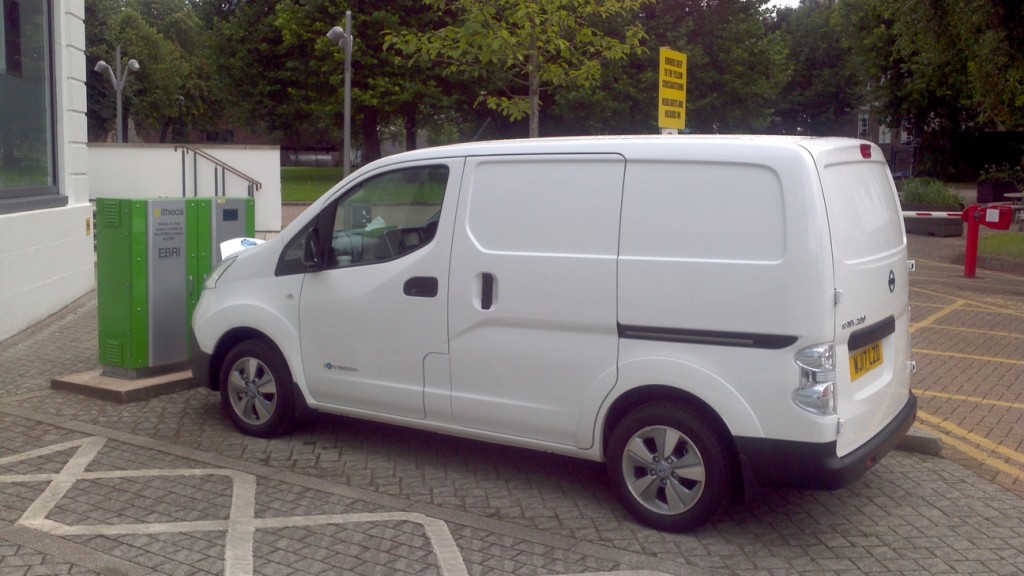
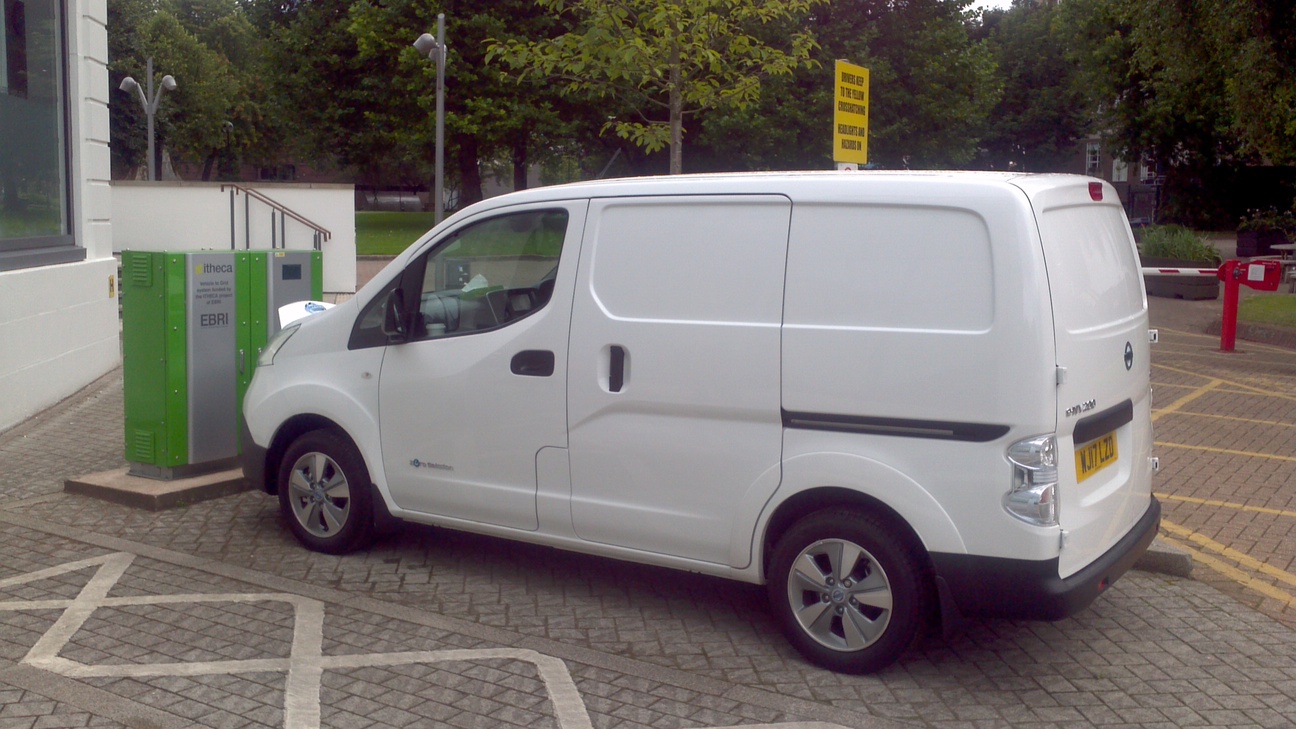
A Exeter Nissan e-NV200 plugged in to the V2G charging station at EBRI

There’s also no mention of the activity that I’m currently engaged in. Developing international standards for the protocols that ChargePoint Services’s charging station management system (CSMS for short) might one day use to communicate with the unnamed electric vehicle supply equipment (EVSE for short) OEM’s V2G capable hardware installed in 135 Great British homes:

Nissan’s Future Promises “Free” EV Charging

The 3rd “Nissan Futures” event entitled “The Car and Beyond” took place in Oslo today. Apart from the European launch of the 2018 Nissan LEAF our suspicions about a 40 kWh battery for the e-NV200 were confirmed:

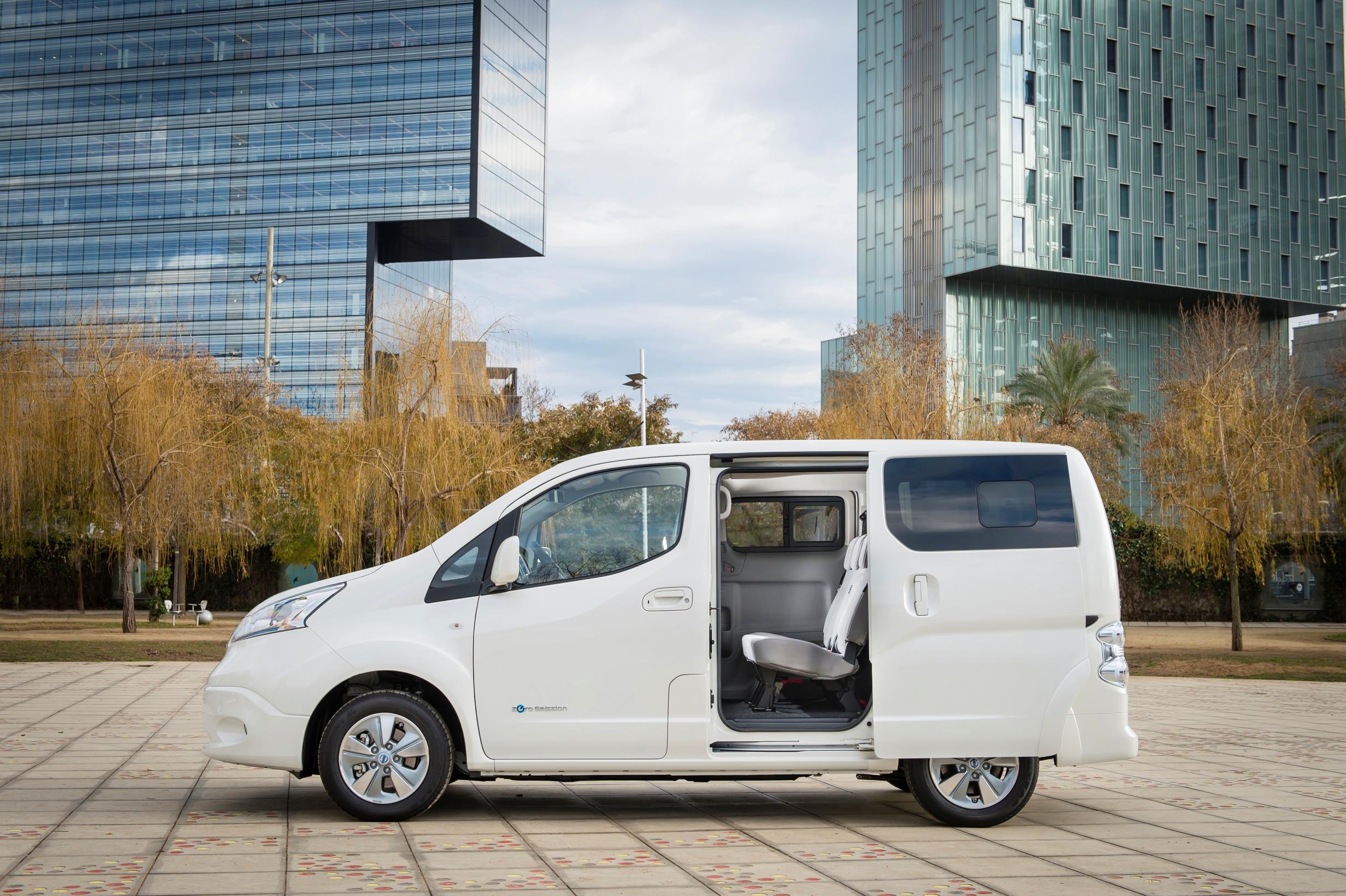
The new 40kWh battery for the 100% electric e-NV200 offers a 60% extended range of up to 280km NEDC. And, with no increase in size of the battery itself, customers will face no compromise in either load space or payload. Crucially, it can help make 100% electric last miles delivery achievable for businesses and professional drivers everywhere, with customers now able to drive more than 100 km further on a single charge.
1450933_426205630_Nissan_world_premiere_of_new_longer_range_e_NV200_van
As well as helping business customers enhance their green credentials, the van represents a key pillar in Nissan’s wider commitment to cutting the level of CO2 emissions in city centres caused by professional drivers making deliveries and/or collections.

Nissan announced a few other things as well, including a so called “Revolutionary ‘free power for EVs’ breakthrough”:

Over the past year in Denmark, Nissan has been testing this revolutionary new way of driving and today, this has become an offer open to all fleet customers throughout the country. Using Nissan bi-directional charging, customers can draw energy from the grid to power their car or van and then ‘sell’ back to the grid for others to use. This means, once a nominal charge has been paid by the business for the installation of a V2G charger there are no fuel or energy costs; just free power for your EV.

And Denmark is just the start. Nissan also announced a UK collaboration with OVO allowing customers to purchase an xStorage home energy unit at a discounted price enabling them to ‘sell’ back energy to the grid. This helps contribute to grid stability in a world where demand for energy is increasing due to a growing, urbanising population. It can result in an additional expected income for users averaging £350 / €400 per year.

OVO Energy have also issued a press release about their collaboration with Nissan today:

The new offering is the first of its kind in the UK and will combine VNet – OVO’s groundbreaking intelligent energy technology – with the capabilities of the innovative Nissan xStorage Home system.

Building from this collaboration, OVO plans to launch OVO SolarStore (beta), the company’s first battery storage offering for qualifying customers. OVO customers with solar households will soon be able to purchase an xStorage Home system direct from OVO for £4,800 (excluding installation, subject to terms and conditions), and benefit from a £350 annual credit and estimated average £240 savings on their energy bill.

According to OVO CEO Stephen Fitzpatrick:

Electric vehicles are fast becoming a mainstream option for drivers and solve many of the challenges facing our cities. We believe that they have an integral part to play in the twenty-first century power grid and accelerating decarbonisation and mobility.

We’re delighted that we can now offer such a compelling incentive to customers who are generating their own clean power, providing a truly sustainable alternative to the traditional energy model.

The press release also waxes lyrical about vehicle-to-grid technology!

Customer vehicle-to-grid (V2G) service planned from January 2018…

V2G technology allows electric vehicles to be fully integrated into the electricity grid and will likely help the grid maximise the use of renewables in the energy system.

The V2G offering will work by allowing Nissan EV owners to connect to the grid to charge at low-demand, cheap tariff periods. They can then use the electricity stored in the vehicle’s battery at home and at work when costs are higher, or even feed electricity back to the grid which could generate revenue for the EV owner. OVO plans to create special tariffs to reward customers for this interaction with the grid.

Currently if all 20,000 Nissan electric vehicles in the UK were connected to the energy network, we estimate that they would generate the equivalent output of a 200 MW power plant with a 10kW charger.

In a future where all vehicles on UK roads are electric, V2G technology could generate a virtual power plant of up to 200 GW. This energy capacity is more than double the peak requirement on the UK grid.

The new Nissan LEAF will be compatible with OVO’s VNet intelligent energy technology. Further details of the offer and the first installations will happen at the same time of the deliveries of the new Nissan LEAF, in January 2018.

If you want to register your interest in OVO’s forthcoming V2G offer they have a page on their web site where you can do so.

Yet another, albeit slightly older, OVO press release reveals more about VNet that arrived with their recent acquisition of VCharge:

In a move towards building a complete “grid smart” charging solution for electric vehicles, OVO Energy will begin to introduce its proprietary VNet technology across the network, unlocking smart charging capabilities on a national scale, ultimately enabling OVO Energy customers’ electric vehicles to function as mobile batteries at home and on-the-go, balancing renewable energy on the grid and allowing drivers to sell back unused energy.

To accelerate this transition to smart charging, OVO has also acquired electric vehicle charge point specialists, ChargedEV and Indra Renewable Technologies, an electric vehicle components and services supplier, and is harnessing their technical expertise combined with Chargemaster’s, to develop a game-changing smart charger, due to be launched to market later in 2017.

OVO also now have a shiny new section on their web site devoted to the “OVO SolarStore (Beta)“:

Built to harness the potential of your solar set-up, OVO SolarStore (Beta) combines a home battery with state-of-the-art software.

Not only could it lower your bills, but by joining the beta you’ll be helping to create a greener, more-efficient energy system for the UK.

  • Reduce your bills by storing surplus solar power in your battery to use later.
  • Your battery will support renewable generation in the energy grid by storing electricity when it’s abundant, and discharging electricity when national demands spike.
  • Receive a fixed monthly credit for using your battery and helping to balance the grid.
  • Optimised and managed by our advanced technology, so you won’t need to do a thing.

The OVO SolarStore page also includes comprehensive facts and figures:

  • Nissan xStorage – Power: 4.6kW, Capacity: 4.2kWh, Up to 5 year warranty, subject to Nissan’s terms and conditions.
  • Export Credit & Increased Solar-self consumption: £240 saving a year
  • Annual value of Battery Credit: £350 saving a year
  • Battery installation survey: £50
  • Battery cost: £4,800
  • Battery installation indicative cost: £500

Getting back to the Nissan press release for a moment, it also points out that:

Nissan also showcased its new home energy storage system, which follows on from the success of xStorage. Created especially for EV owners, customers can plug their electric vehicle directly into the wall box to charge. It comes with its own built in energy storage system, giving customers the ability to better manage their energy costs and even generate their own electricity from solar panels, delivering 100% renewable and zero emission power for their car.

1450927_426205642_Home_Energy_System_xStorage

I wonder if OVO will ever get around to offering a game-changing bidirectional smart charger version of Nissan’s new combined home energy storage system? That would seem to be the perfect answer to the conundrum posed in our banner way back at the top of this article!

OVO Energy Embrace V2G

We’ve mentioned OVO Energy before, in the context of innovative financial models. Now we can mention them again, this time in the same sentence as our favourite three letter acronym! In a new section of their website devoted to electric vehicles OVO include an overview of V2G and demand side response (DSR for short). Please read the whole article, but here’s an extract:

The electric vehicle revolution will do more than reduce carbon emissions. Vehicle-to-grid technology (V2G), can give you ultimate control over your energy, and even make you money. Fancy getting your own mini power station? Then read on.

‘Vehicle to grid’ technology enables energy stored in electric vehicles to be fed back into the national electricity network (or ‘grid’) to help supply energy at times of peak demand. It’s just one technological advancement in a slew of new initiatives like ‘smart charging’ and ‘demand side response’ that are aimed at changing the way individuals, and businesses, use energy in the future. In short: the electric car revolution is tied into a whole new way of consuming energy.

We’re hurtling towards a place where ‘two-way’ electric car chargers can enable homeowners with electric cars to sell their energy back to the national network. It’s a smart idea when you consider that over 90% of cars are parked at any one time – which is a lot of energy just sitting there doing nothing. This technology will give you the opportunity to manage your energy your way, and potentially become energy self-sufficient, reducing everyone’s reliance on energy companies. Get solar panels fitted, then adopt vehicle to grid technology and your home could become a private mini-power station!

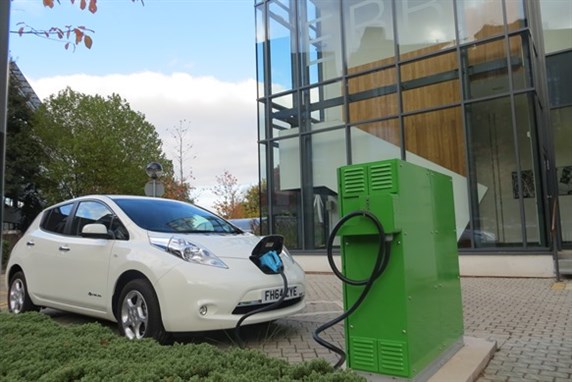
For some strange reason OVO don’t include a picture of this innovative new technology in action, so here’s one from the extensive V2G UK archives:

However they do include this image in the associated demand side response article:

together with this explanation:

Did you know that, as consumers, we are at the heart of a UK wide initiative to help secure our energy future? Not simply passive bill payers, our energy will, increasingly, be in our hands and our actions will play a crucial role in ensuring its security.

Demand side response or DSR is the unwieldy name of a programme that aims to rebalance our energy needs around the country. It will not only change how we produce energy, but also how we supply and use it. From manufacturing, public sector and big business to the householder, we all have a role to play.

Please read that article from cover to cover too. The OVO V2G article concludes:

We can help you charge your electric car everywhere, for less. Our EV Everywhere tariff is designed specially for owners of electric (and plugin hybrid) cars, and comes with fixed energy prices for two years, 100% renewable energy and free membership of Polar Plus, the UK’s biggest EV charging network.

Exciting times are afoot in the V2G sector here in the United Kingdom!

Catherine Mitchell Meets Exeter Community Energy

On Tuesday I attended a meeting organised by Exeter Community Energy. The theme for the evening was “UK Energy Policy and the role of community energy”, and the main speaker was Catherine Mitchell who is Professor of Energy Policy at Exeter University, and was a lead author in the Inter-Governmental Panel on Climate Change Working Group 3’s recent fifth assessment report. To summarise briefly, Catherine had many more good words to say about community energy than she did about Great British Energy Policy!

It quickly became apparent that Catherine felt that the change “from ‘dirty’ energy to sustainable energy” is happening much faster elsewhere in Europe, and further afield, than it is here in the UK. After taking a while to consider a suitable epithet she settled on “constipated” as the best descriptor of UK energy policy!

Energy is always political, and has become much more political under the coalition government. Rational evidence based decision making has stopped. The current focus is on nuclear power, with only lip service being paid to renewable generation, demand management, demand reduction and community energy generation.

What positive changes that are taking place are “moving in from Europe”. Catherine moved on to give an overview of the current state of play of electricity generation across Europe. Broadly demand in the 21st century has been constant, with a slight dip due to the recession in 2009. The renewables’ share of  total generation has been increasing throughout that period, and the most recent figures show much more renewable capacity being constructed than fossil fuels or nuclear.

In the UK wholesale prices are the 3rd highest in Europe, and interconnections with other countries, which are “very helpful for renewables”, are lacking. Great Britain and Poland “are trying to water down” the EU 2030 framework for climate and energy policies. Conventional utilities are however “under threat” due to the low marginal costs of renewable energy sources, which undermines their business model. However in the UK “self reinforcing governance” makes it hard for new entrants to challenge the “Big 6”, who currently have 91% of the UK electricity market, and even more for energy overall. However “despite this, there are some changes”.

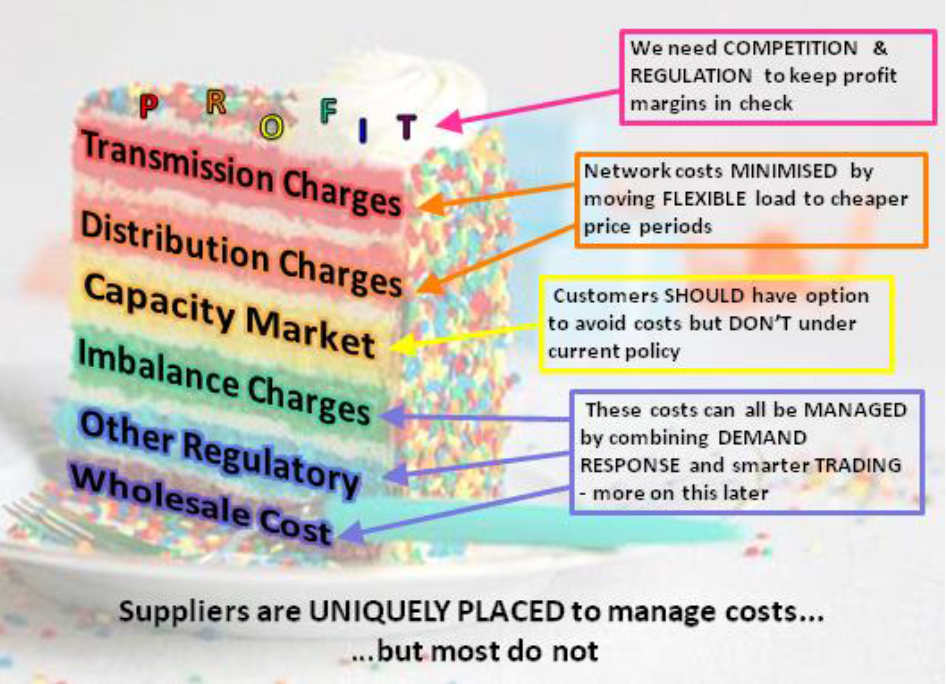
Community energy policy is “very inconsistent”, but there are new demand side entrants such as Tempus Energy, and new financial models from the likes of OVO Energy. Combined heat & power “is starting to come together”, but “the Big 6 don’t want to change. People need to start to do things differently”. Here’s how the UK energy cookie currently crumbles according to Tempus:

and here’s a video in which they explain how matters might be improved by using “a smarter approach for everybody”:

At that point the questions from the audience began. The one that most interested me concerned energy storage, and the possibility of getting paid for providing that useful service. According to Catherine “Norway is doing wonderful stuff, Germany has started, but there are no plans in Great Britain”. A member of the audience pointed out that the Renewable Energy Association had recently launched “UK Energy Storage” to lobby government, apparently:

The trade body for all storage technologies across the UK

I waved my hand in an endeavour to point out that the Electricity Storage Network has in fact been around for quite some time now, and say they are:

The industry association for the promotion of electrical energy storage.

However my turn to ask a question didn’t come around until right at the end of the evening. It seemed apparent that Catherine wasn’t very impressed by current UK energy markets, and I wondered:

Whether any future market based on “Anglo Saxon Capitalism” would be up to the job of solving the “energy/climate conundrum”?

Catherine assured me that she didn’t see capitalism going away for the foreseeable future. The slides from her presentation can be downloaded from the IGov web site.

Last year, in her role as an IPCC lead author, Catherine Mitchell also gave a presentation about UK energy policy at the Transformational Climate Science conference at Exeter University. Here it is:

Catherine also published an article on the IGov web site after that conference. For additional background information please also read:

“In Matters Of Climate Change, The Environmental Requirement Must Take Precedent Over Short Term Economic Goals”

Catherine’s conclusion was that:

We as individuals and communities in civil society have to do all we can to get our politicians, neighbours, businesses, energy suppliers and so on to take climate change seriously. Climate and energy policy must take note of the IPCC warning and act now.