V2G at Everything Electric NORTH 2024

I was fortunate enough to find myself on stage for two different panel sessions at the Everything Electric NORTH show in Harrogate last weekend. We recorded those two sessions in full for posterity, but there were plenty of other interesting topics apart from V2x. Some extracts from those can also be found below.

My first panel on Saturday was on the topic of “Vehicle to Everything? What’s the true potential?”, held in the EEN “Giga Theatre”. The tagline for the session was “We believe that V2X could be the biggest benefit of all in a world with battery electric vehicles, but how do we go ‘bidirectional’?”:

As you can see from the video below, I found myself sat next to Robert Llewellyn of Fully Charged fame as a last minute replacement for host Dan Caesar:

Mark Potter from 3ti explained the full suite of V2x three letter acronyms (TLAs for short).

  • V2L = vehicle-to-load
  • V2H = vehicle-to-home
  • V2B = vehicle-to-building
  • V2G = vehicle-to-grid
  • V2I = vehicle-to-infrastructure
  • V2V = vehicle-to-vehicle
Continue reading →

VW preview the ID.5 e-SUV, including V2x

Earlier today Volkswagen announced the “world premiere” of the ID.5 “electric SUV coupé” and the ID.5 GTX. According to the press release:

On the “Way to ZERO”: The new ID.5 does more than just expand the successful ID. family; the new Volkswagen launch moves the electrification of its new car fleet forward and into a new market segment. The elegant, expressive E-SUV coupé is equipped with the new ID. software version 3.0, which includes improved charging performance and voice control among other features. With the use of swarm data and latest-generation driver assistance systems, Volkswagen is also taking the next step towards automated driving…

Elegant and dynamic design, outstanding aerodynamics, extensive range. The new ID.5 and the sporty ID.5 GTX with dual-motor all-wheel drive are the new, long-range top models in the ID. family. Like all ID. models, Volkswagen’s first e-SUV coupé is based on the Volkswagen modular electric drive matrix (MEB).

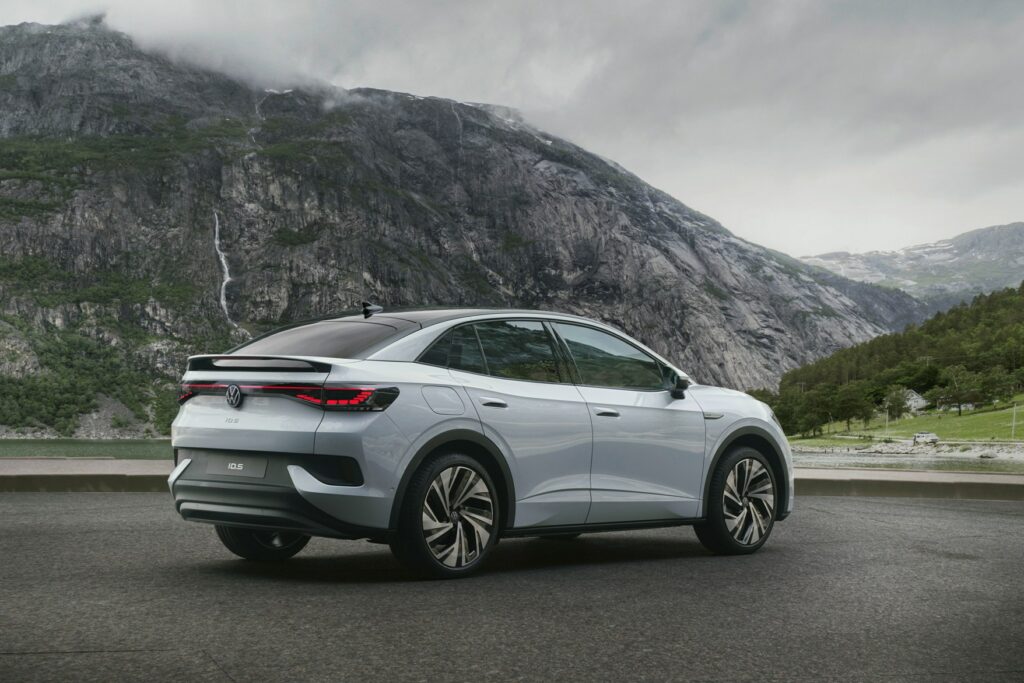
Our interest is of course primarily in the (dis)charging capabilities of the new VW. We carefully selected a promotional picture that includes the charging port, albeit with the door closed. The press release states that:

With its We Charge charging system, Volkswagen offers the fastest-growing environmentally friendly system for convenient, networked and sustainable charging. The network has around 250,000 charging points across Europe. Using the standard Mode 3 cable, the e-SUV coupé can also be charged with up to 11 kW of alternating current (AC), even when it is out and about. Charging performance can reach up to 135 kW as standard at a fast-charge station.

However despite VW’s earlier hints, the press release makes no mention of any potential ability to discharge the ID.5’s traction battery! For that we have to turn to the launch video:

At 7:35 in the video Klaus Zellmer puts it this way:

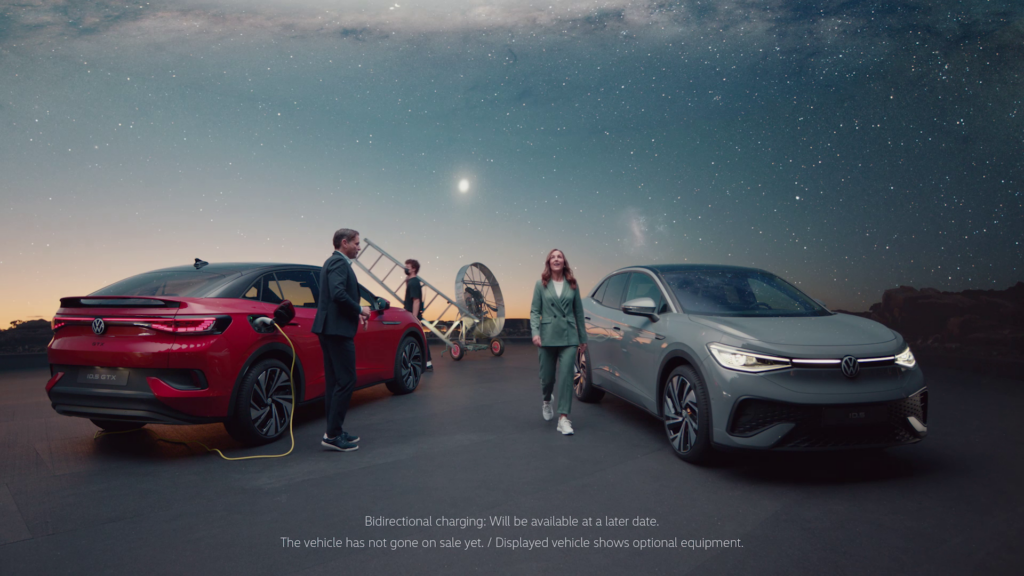
We lost power, and in order to keep the lights on we now use the ID, with its battery, and it’s called bidirectional charging…

In your usual use case you would use the electricity from the grid, use it for your car to power the battery and drive around. But it can also be done the other way around, so you can also use the battery power, the electricity, to power whatever you want to power.

There’s no mention of the word “grid” however, so let’s settle on vehicle-to-load (V2L for short) for the moment shall we? Also be sure to read the (very) small print:

There is one other interesting technical feature of the ID.5 that does gets a mention in the press release:

With Car2X communication, Volkswagen is taking safety to a whole new level. Data from compatible vehicles in the Volkswagen fleet and signals from infrastructure within a radius of up to 800 metres can be locally interpreted in a fraction of a second, enabling driver alerts about dangerous areas, accidents and stationary traffic.

Add vehicle-to-infrastructure using WLANp to the ID.5’s list of capabilities as well!

Nissan and Qualcomm Trial Cellular V2X in Japan

In a press release yesterday Nissan announced that:

Continental, Ericsson, Nissan, NTT DOCOMO, Inc., OKI and Qualcomm Technologies, Inc., a subsidiary of Qualcomm Incorporated (NASDAQ: QCOM), announced today plans to carry out their first Cellular Vehicle-to-Everything (C-V2X) trials in Japan. The objective is to validate and demonstrate the benefits of C-V2X using direct communication technology defined by the 3rd Generation Partnership Project (3GPP) in their Release 14 specifications. The trials are designed to show the enhanced range, reliability and latency benefits of C-V2X direct communications operated in 5 GHz band. Additionally, the C-V2X Trials are designed to demonstrate the complementary benefits of network-based communications utilizing LTE-Advanced (LTE-A). The trial results will help develop the ecosystem by providing inputs to the relevant stakeholders, including ITS-related organizations and government agencies, as we prepare for the connected car of the future and the industry’s evolutionary transition towards 5G New Radio (NR), the new global cellular standard being defined in 3GPP.

Here at V2G UK we’ve been waiting for a trial “proof of concept” of this sort of technology since we showed our Lego “V2x concept” at the Department for Business, Energy and Industrial Strategy in London last year. Nissan’s press release continues:

C-V2X radio technology is state-of-the-art cellular technology and is being validated for global deployments, and leverages the upper layer protocols developed by the automotive industry over years of research to support new advanced end-to-end use cases. C-V2X direct communications provides enhanced range and reliability without relying on cellular network assistance or coverage.

Preparation work is well underway, with the trial expected to begin in 2018, and the used cases are designed to focus on Vehicle-to-Vehicle (V2V), Vehicle-to-Infrastructure (V2I) and Vehicle-to-Pedestrian (V2P) direct communications, as well as Vehicle-to-Network (V2N) operations over cellular network-based wide area communications with cloud access.

The use case we showed at BEIS involved Vehicle-to-Infrastructure communications, so this is all music to our ears! There is more:

For the field trials, Continental will utilize the Qualcomm® C-V2X Reference Design, which features the Qualcomm® 9150 C-V2X chipset with integrated Global Navigation Satellite System (GNSS) capability to build connected car systems and integrate the systems into Nissan vehicles. Nissan will perform V2X use case selection and develop test scenarios with key performance indicators (KPIs) for C-V2X technology validation. OKI, one of the leading companies in ITS, will bring their expertise in roadside unit (RSU) infrastructure and applications to demonstrate V2I as a viable technology for advanced traffic applications by integrating the Qualcomm® 9150 C-V2X chipset into their RSU. Ericsson, as one of the leading companies in technology and service for telecommunications, will join the V2N use case discussion considering combination of direct communication and LTE-A network technologies. NTT DOCOMO will provide LTE-A network and V2N applications to demonstrate the benefits of complementary use of network-based communications for a variety of advanced automotive informational safety use cases.

Great stuff! Now all that’s required is to add a Nissan LEAF and a touch of V2G to the V2x mix. The press release didn’t include any images, so here’s one from our own archives:

2017-10-13-Connected-2

V2G in the BEIS Basement

Last Thursday we took the train up to London because the next morning we were attending a meeting organised by the British Standards Institution on the topic of “The future of standards for a smart, flexible energy system“. Instead of one of the BSI’s own offices the venue for the event was the conference centre of the Department for Business, Energy and Industrial Strategy, just around the corner from Westminster Abbey.

Apart from attending the event itself we were also one of five SMEs displaying our wares in an adjacent room. Here’s how our stand looked when we’d just about finished setting up:
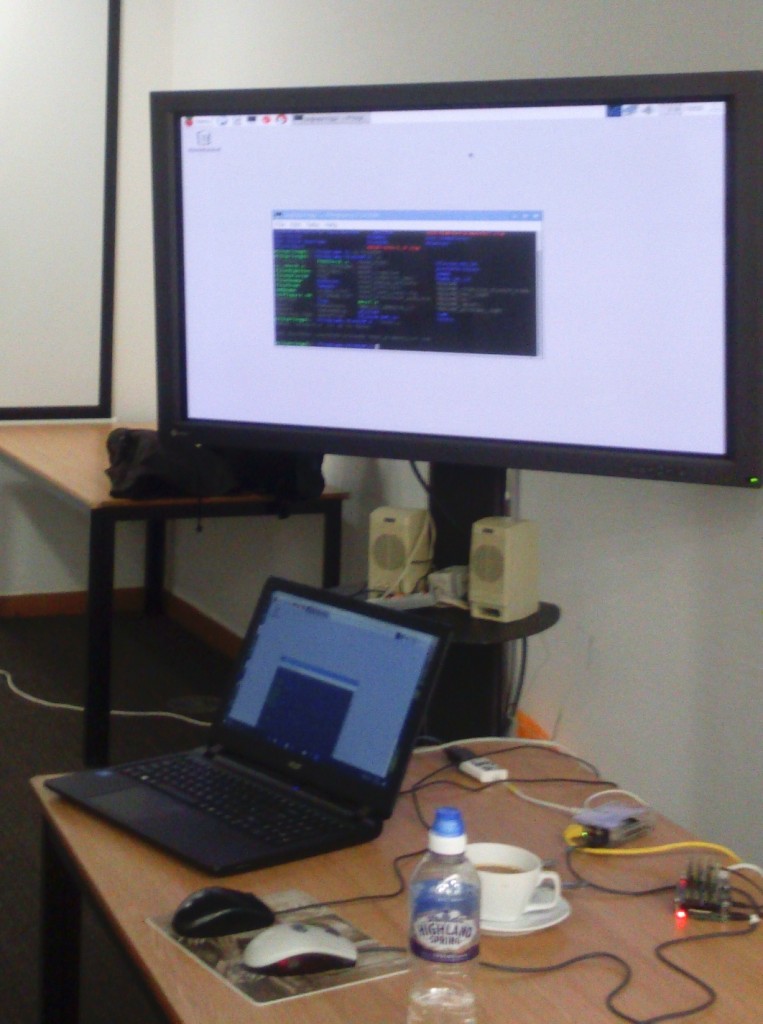
RasPisGalore

That was when a BEIS engineer told us what we’d missed during our journey the previous day. The announcement of the UK Government’s new Clean Growth Strategy:

An ambitious blueprint for Britain’s low carbon future.

This strategy sets out our proposals for decarbonising all sectors of the UK economy through the 2020s. It explains how the whole country can benefit from low carbon opportunities, while meeting national and international commitments to tackle climate change.

No doubt we’ll have much more to say on all that in due course, but for the moment here’s an overview of V2G Limited’s clean growth strategy, as displayed in the BEIS basement last week. First of all let’s take a look at the problem UK plc has committed to tackle:
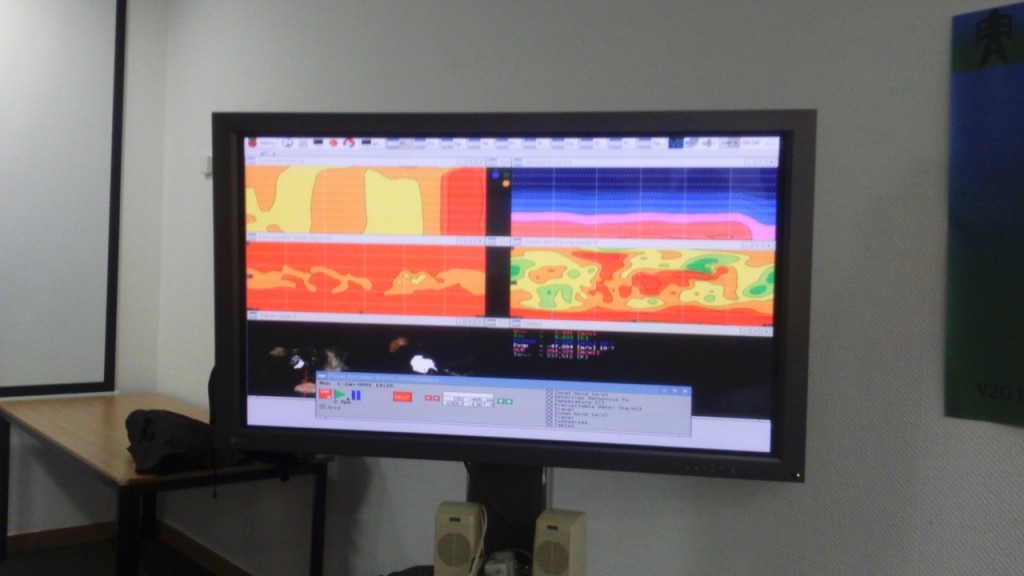
DSC_1252

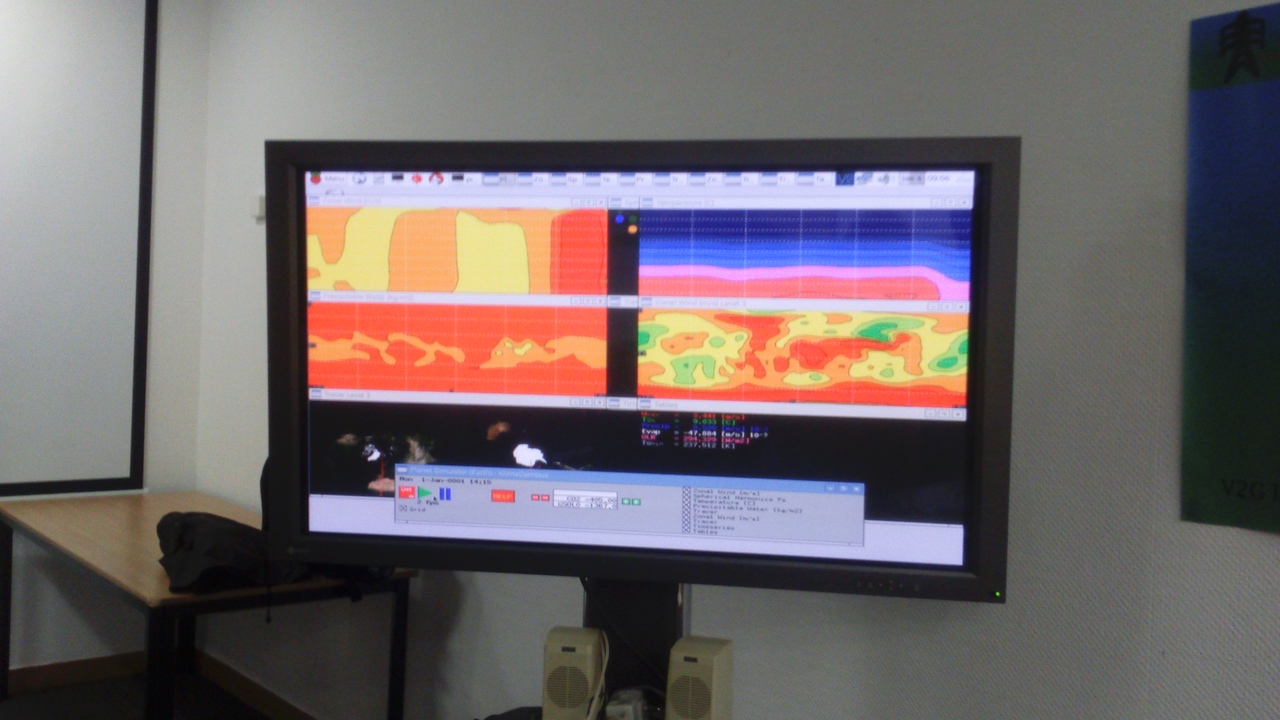
That’s the output of a “medium complexity” climate model running on V2G’s trusty Raspberry Pi 3B and displayed on BEIS’ 55 inch screen. Note that the carbon dioxide concentration had been increased to 405 ppm from the default 280. Amongst other things that’s a graphical demonstration of just how much number crunching bang you get for 1.3 bucks in this day and age. Now our little computational engine doesn’t forecast the weather of course, but the United States’ National Hurricane Center’s much larger engine does. Here is its Friday 13th forecast for Hurricane Ophelia:
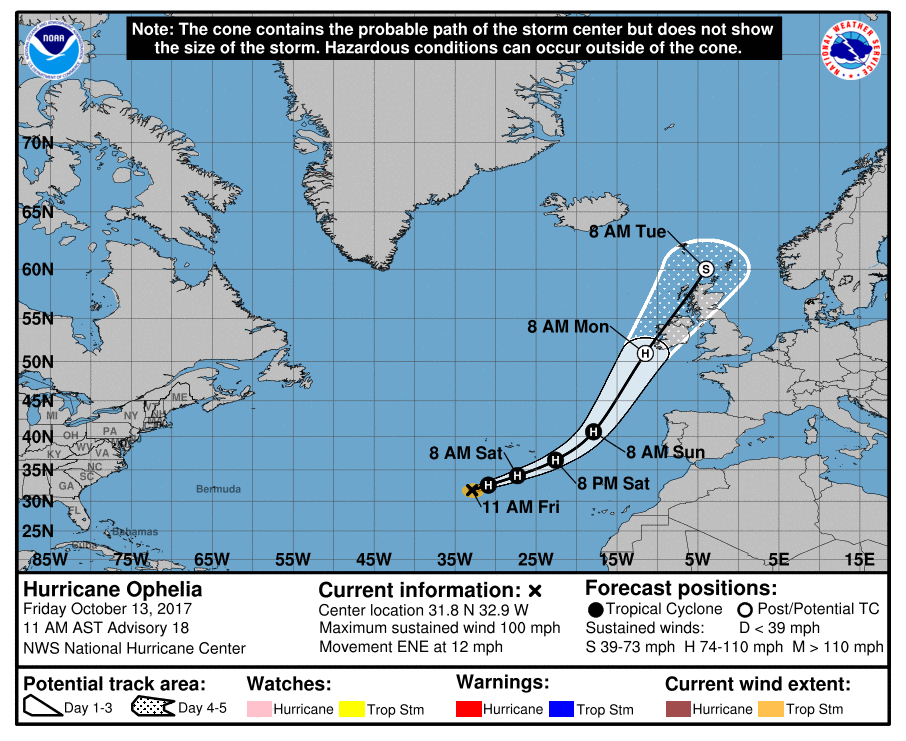
ophelia_5day_cone_20171013-15Z

I don’t think anybody’s accurately added up the costs attributable to Ophelia yet, but according to Wikipedia at the moment:

Damage has been estimated at 1 billion euros ($1.18 billion USD), making it one of the most expensive storms ever to strike the UK and Ireland.

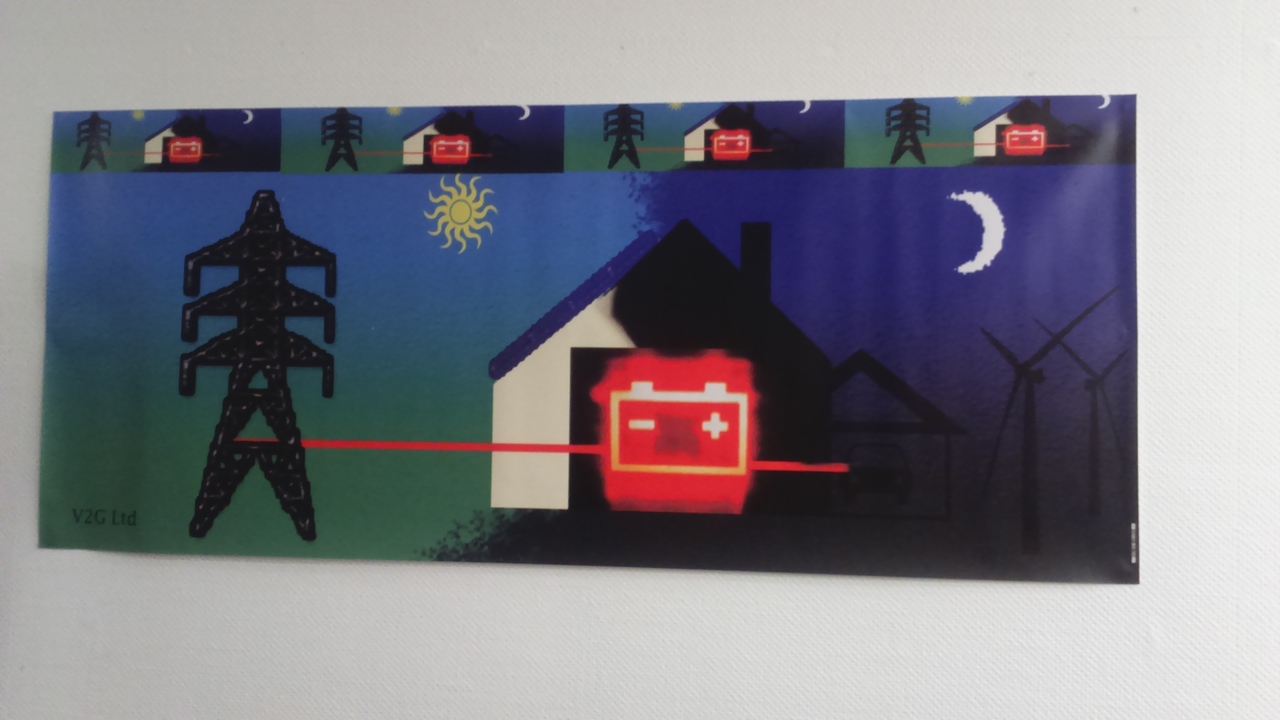
Having outlined the problem, here’s a slightly modified version of V2G’s 5 year old artist’s impression of part of the solution that was also on display in the BEIS basement:
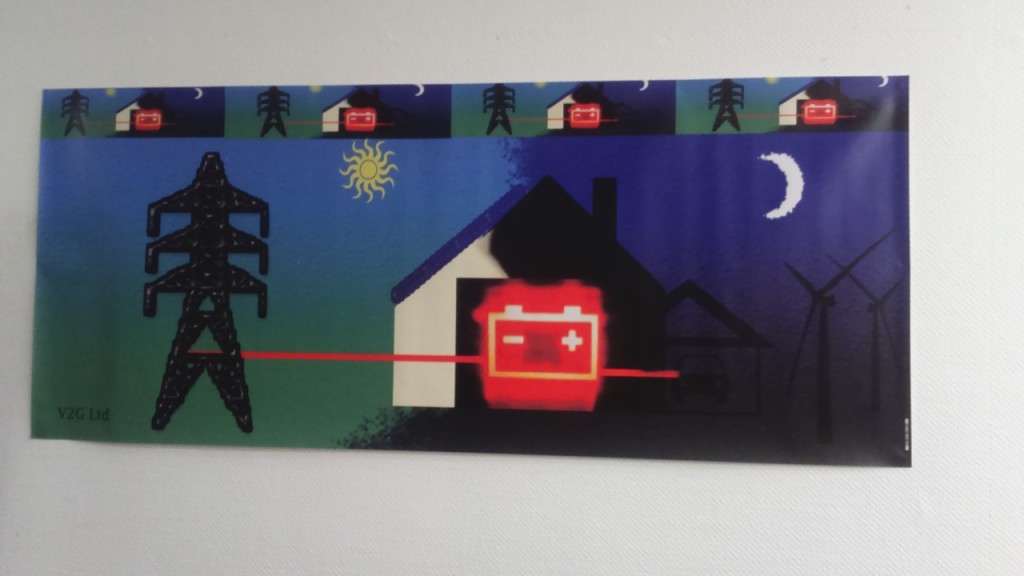
DSC_1251

How much might the financial damage caused by Ophelia’s passage have been reduced if every building in the UK and Ireland had access to some local energy generation plus some static and/or mobile energy storage? Whilst you ponder that question, here’s a close up of our RasPi 3B together with its cousin, a Raspberry Pi 2B with a cluster of 4 baby Raspberry Pi Zeros on its back:
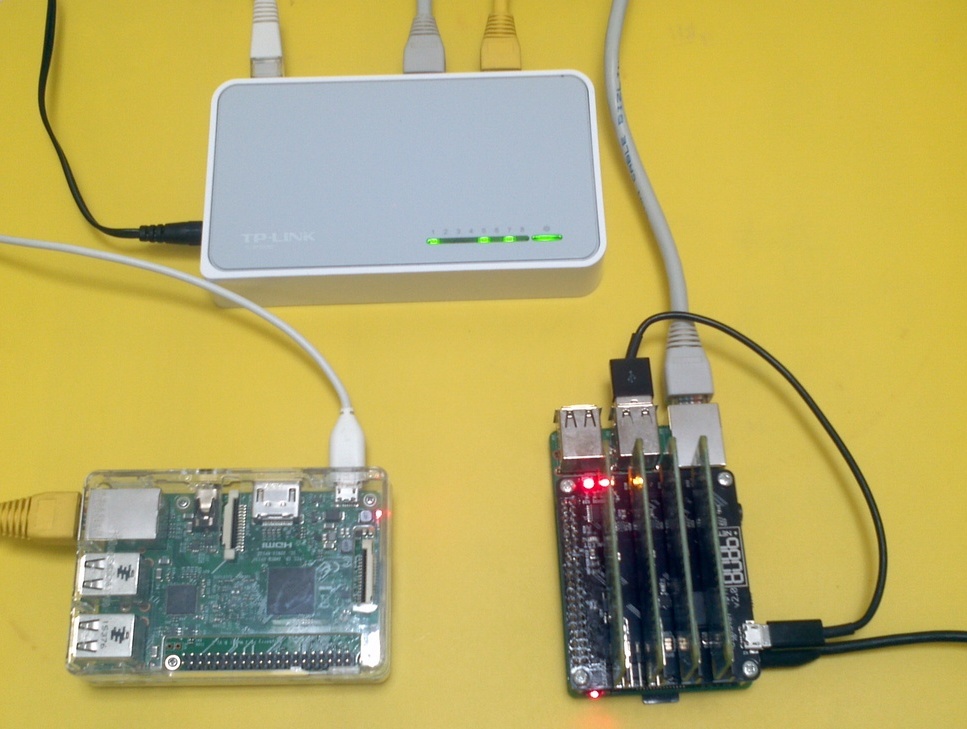
2017-10-13-RasPis

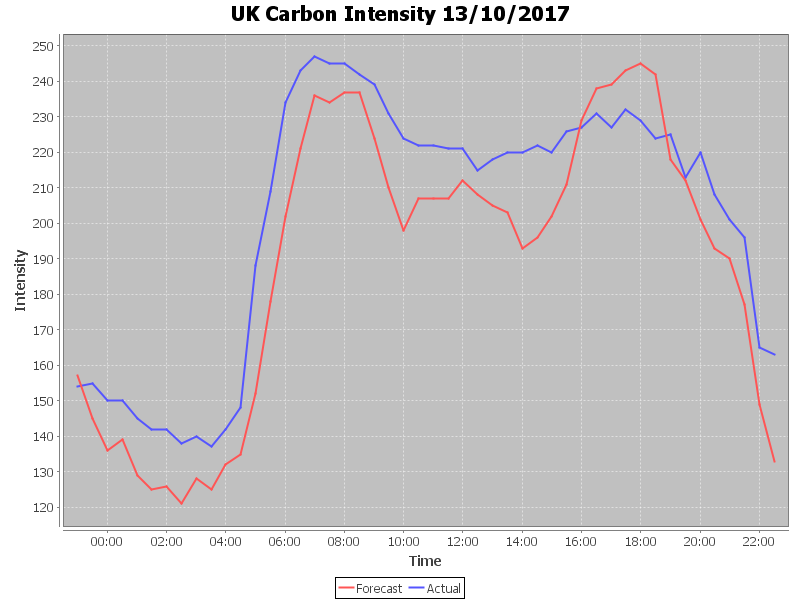
The RasPi 2 was running our new open source UK plc carbon intensity plotter. Here’s what that revealed on Friday the 13th of October 2017:
CarbonIntensity-20171013

As you can no doubt readily appreciate the graph is not a horizontal line! The value at any time is dependent on demand of course, but also on the amount of renewable generation in the mix. That is highly dependent on the weather, and indeed the weather forecast should you be attempting to control UK plc’s carbon emissions. If you’re “committed to tackling climate change” you really should be committed to minimising the integral of the blue line representing UK plc’s actual carbon intensity. Unfortunately that’s not how the UK’s energy markets currently operate. Perhaps they need a redesign?

The Raspberry Pi Zeros only have a single core rather than the 4 cores on the climate modelling 3B. Nonetheless at a cost of four Great British Pounds a pop (plus tax) they are more than capable of acting as a highly “intelligent” device connected to a Great British “smart grid”. Ours already run a variety of British “standards for a smart, flexible energy system”. If you doubt that please feel free to read all about the time V2G’s offices suffered their very own “blackout”. As I pointed out way back then:

Such a piece of electronics wouldn’t in and of itself add a whole lot to the price of an electric vehicle and/or a garage in Dunchideock, or anywhere else on the planet for that matter.

I cannot help but wonder how much the Great Dunchideock Blackout cost Western Power Distribution, how much the evidently changing climate in this part of the world is costing and will cost them, and how their electricity distribution network is coping with the assorted stresses and strains generated by all the renewable power sources currently being tacked onto it down here in not so Sunny South West England that do not currently have any form of energy storage associated with them.

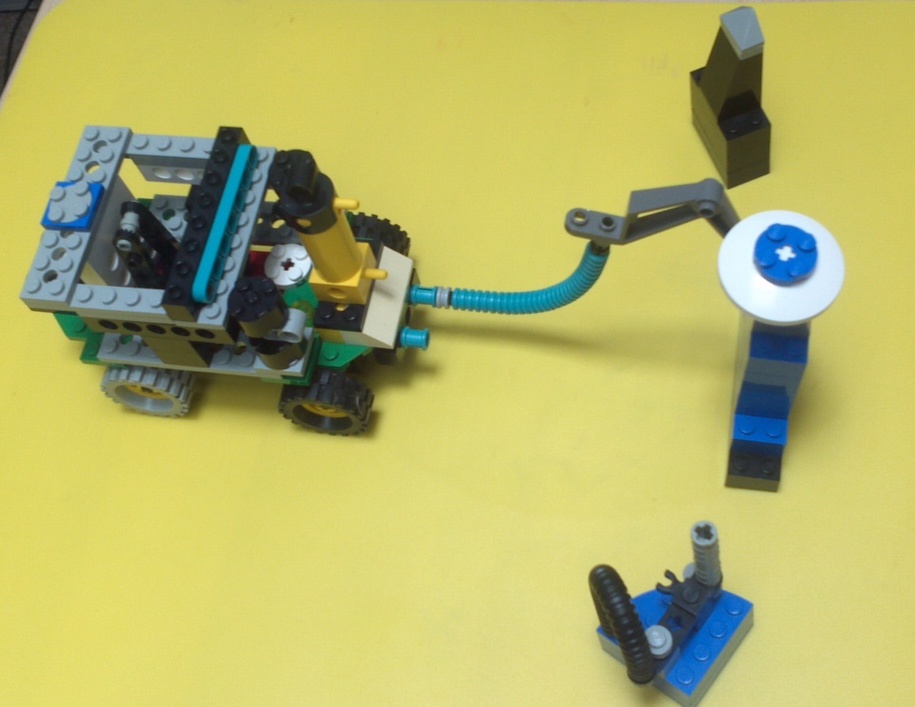
Moving on to the near end of our table at BEIS, here’s a LEGO tableau representing our artist’s impression of a passenger free connected vehicle driven by a “robot” deciding which of three possible electric vehicle charging stations it should connect to:
2017-10-13-Connected-2

In this instance its battery is nearly flat, it’s in a hurry to pick up another human and the grid is in good shape so it’s therefore decided to select the ultra rapid “robotic” charging station. This may seem like child’s play, but it isn’t. On Friday Julian Anderson of Thales e-Security stopped by our stand. We had a bit of a play with the Lego and a longer discussion about the cyber security implications of connected vehicles and autonomous EV charging.

Here’s another point to ponder. Apart from BEIS and Thales we also had a long conversation with an engineer from Ofgem about “community energy markets“. However the people who make policy were conspicuous only by their absence from our audience.

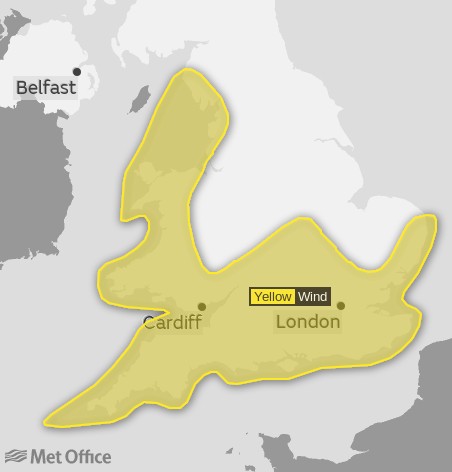
N.B. There’s already another big storm on the way to us here in South West England, as well as Ireland once again. This one’s called Brian, and according to the Met Office:

Between 04:00 Sat 21st and 23:59 Sat 21st

A spell of strong southwesterly winds is expected. Some coastal routes and communities are likely to be affected by large waves, with potential for flooding of properties. Some transport disruption is likely across the warning area, with delays to road, rail, air and ferry transport. Short term loss of power and other services is also possible.

Brian-20171019+2d